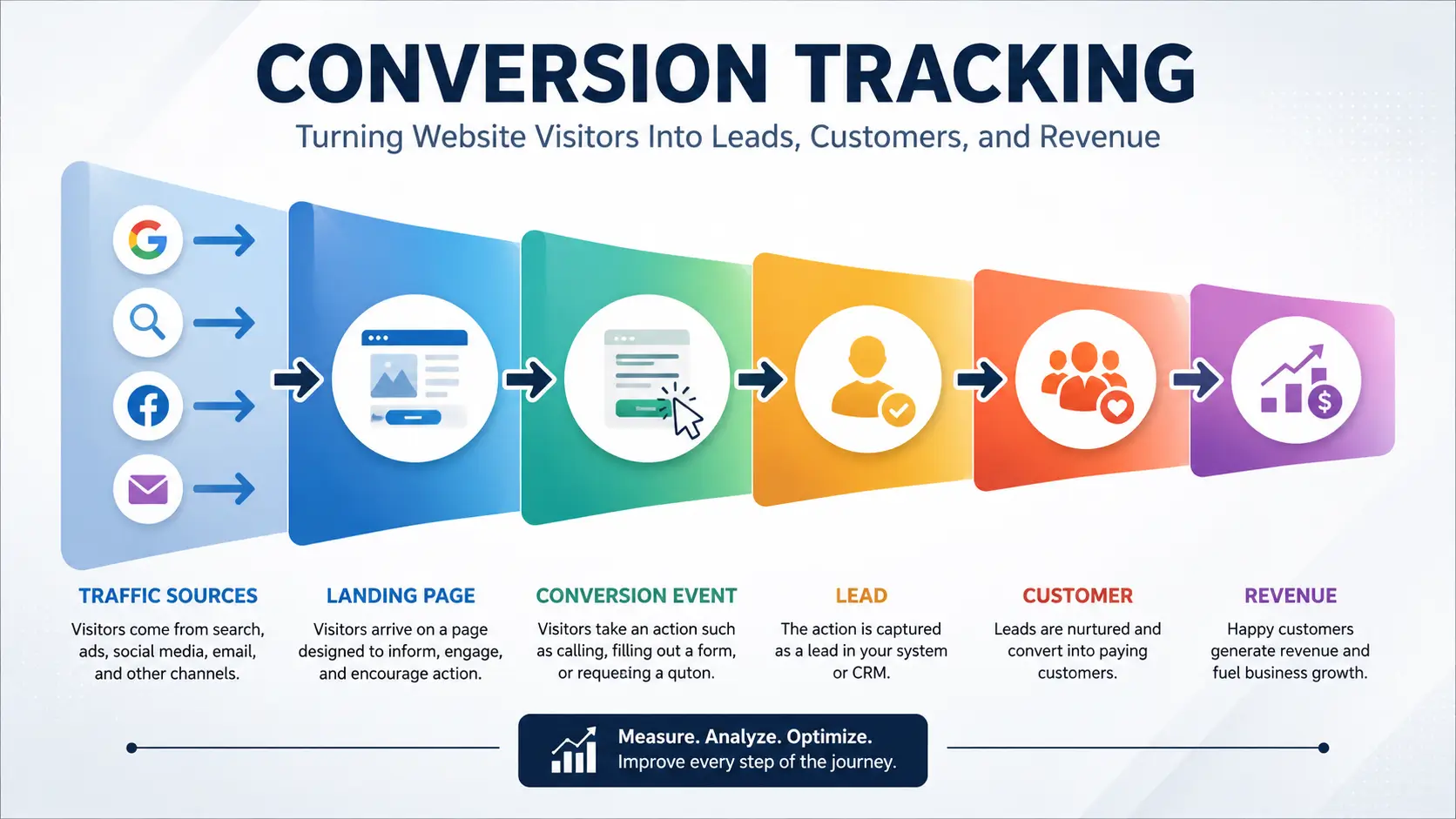
Measuring the actions that turn website visitors
into leads, bookings, customers, and revenue
Looking Beyond Traffic
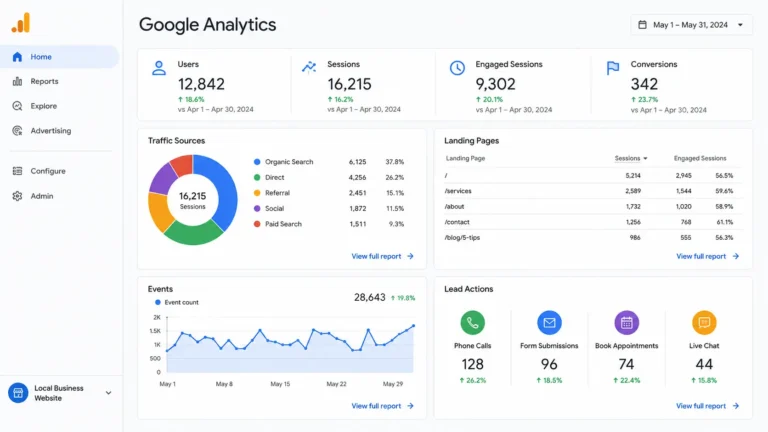
Traffic by itself does not tell you whether marketing is working. A local business may receive hundreds of website visitors every month and still have no idea whether those visitors are producing phone calls, quote requests, appointments, or sales.
Conversion tracking is the process of measuring those actions. It connects marketing activity to real business outcomes. For a local service business, a conversion might be a phone call, a completed contact form, a quote request, an appointment booking, a downloaded guide, an email sign-up, or a completed purchase.
Without conversion tracking, a business only sees visitors
With conversion tracking, it sees results
Why Conversion Tracking Should Matter to a Business
Many business owners focus on numbers that look impressive but provide little business value. Website visits, pageviews, impressions, and social media likes are useful metrics, but they do not necessarily create revenue.
Conversion tracking helps answer questions such as which marketing channel generates leads, which landing page produces the most phone calls, whether Google Ads are profitable, which keywords attract customers, and whether SEO is generating measurable business results.
Suppose a plumbing company spends $1,000 on SEO and receives 500 visitors. Traffic alone does not tell much. However, conversion tracking might reveal that those visitors generated 20 phone calls, 7 quote requests, 5 booked jobs, and $5,000 in revenue. Suddenly, the business can measure return on investment instead of guessing.
How Conversion Tracking Works
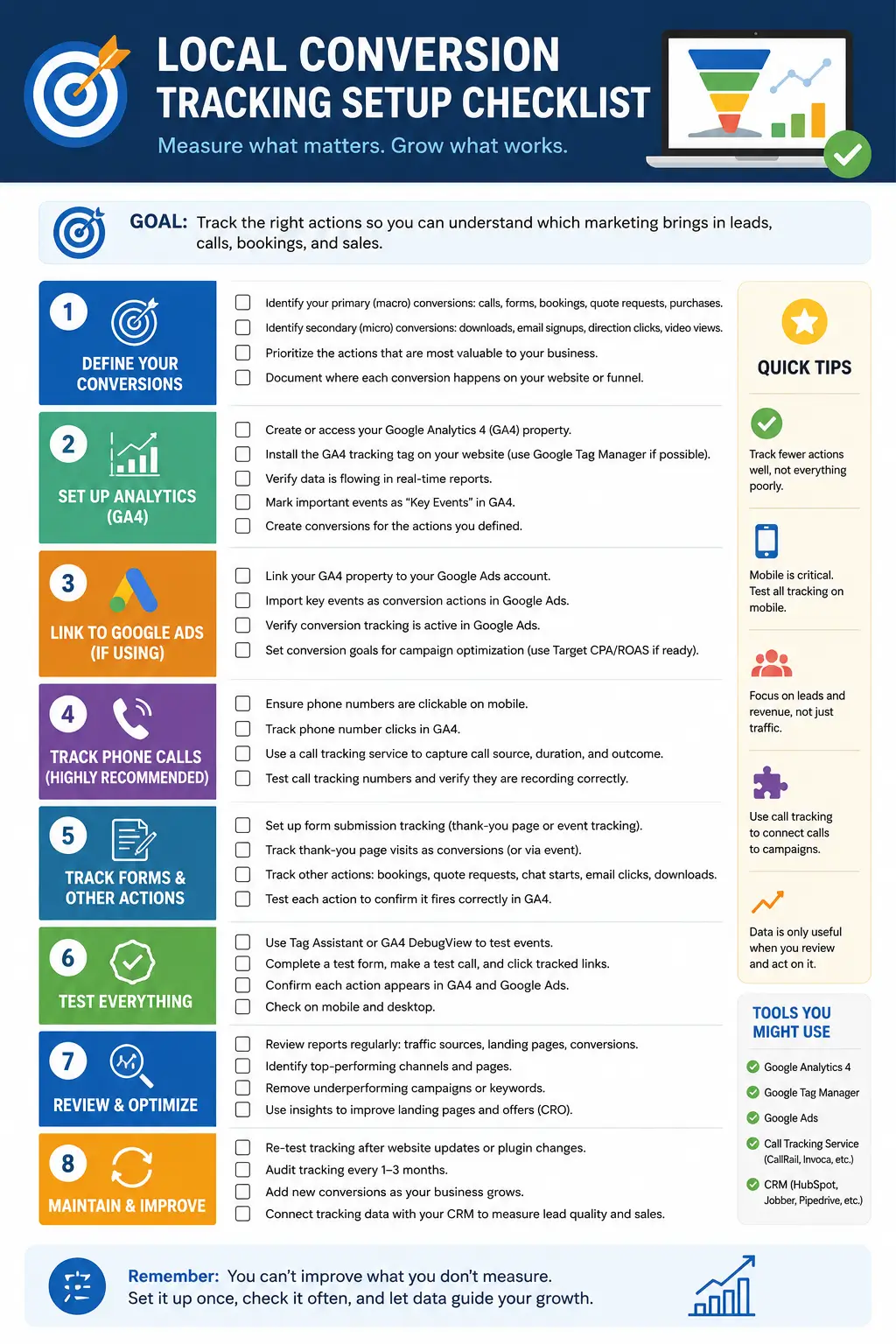
Most tracking systems measure actions as events. Google Analytics 4 records user interactions and allows businesses to designate important actions as key events. Google Ads uses conversion actions to evaluate campaigns and improve bidding.
Common events include form submissions, phone number clicks, appointment bookings, thank-you page visits, quote requests, email link clicks, file downloads, and purchases. Once those events are measured, reports can show which pages and traffic sources produce the highest number of conversions.
Macro-Conversions and Micro-Conversions
Not every action has the same value.
Macro-Conversions
Macro-conversions are the primary goals that directly contribute to revenue. Examples include phone calls, contact forms, quote requests, appointment bookings, and purchases.
Micro-Conversions
Micro-conversions are smaller actions that indicate interest and movement through the buying process. Examples include downloading a pricing guide, signing up for email updates, clicking a directions link, watching a video, or visiting multiple service pages.
Micro-conversions help businesses understand customer behavior before the final conversion occurs.
A Local Business Example
A pest control company runs Google Ads for emergency services. The ads receive plenty of clicks, but the owner does not know whether they generate leads.
After setting up conversion tracking, the business discovers that mobile phone clicks produce most leads, one landing page converts twice as well as another, and certain keywords generate qualified customers while others do not.
Instead of guessing, the owner can move budget toward what works and improve weak campaigns.
Tracking Phone Calls
For many local businesses, phone calls are the most valuable conversions. Google Analytics can track when someone taps a phone number link, but it cannot tell whether the call connected, how long the conversation lasted, or whether the caller became a customer.
That is why many businesses eventually use call tracking platforms. These systems can connect phone calls back to specific keywords, Google Ads campaigns, organic search traffic, and landing pages. This provides a clearer picture of which marketing activities generate actual leads.
Common Conversion Tracking Mistakes
One of the biggest mistakes is tracking everything. When every page view, scroll, and button hover is counted as a conversion, reports become noisy and difficult to interpret.
Other common problems include forgetting to test forms after website updates, broken tracking scripts, measuring weak actions instead of valuable leads, assuming every lead becomes a customer, and ignoring lead quality or close rates. Conversions represent opportunities, not guaranteed revenue.
Improving Conversion Rates
Tracking is only the beginning. Once conversions are measured, businesses can improve their websites and campaigns. Examples include making forms shorter, moving the phone number higher on the page, strengthening calls to action, improving page speed, creating better offers, and testing different headlines or layouts.
This process is known as conversion rate optimization. A simple rule applies: you cannot improve what you do not measure.
Attribution and the Customer Journey
Customers rarely convert during their first visit. Someone might find the business through Google search, leave the website, return later through a social media ad, and then submit a contact form.
Attribution determines which channels receive credit for the conversion. Modern analytics platforms use attribution models to understand how different touch-points contribute to the final result. This provides a more complete view of the customer journey.
Suggested Tool:
**************************
******************************
External References:
Google Analytics Help: About key events
Frequently Asked Questions About Conversion Tracking
Is conversion tracking only useful for Google Ads?
No. Conversion tracking can measure results from SEO, paid ads, email marketing, social media, referrals, and other traffic sources.
What is the difference between a conversion and a key event?
In Google Analytics 4, important events can be marked as key events. These represent the actions a business values most.
What is considered a good conversion rate?
It varies by industry and traffic source. Some local service pages convert at a much higher rate than general informational pages because the search intent is stronger.
Can conversion tracking measure revenue?
Sometimes. E-commerce sites can track revenue directly. Service businesses often need call tracking systems or CRM software to connect leads with actual sales.
Do I need a developer?
Basic tracking can often be set up without coding. More advanced tracking may require help with forms, ecommerce systems, or custom events.
Related Glossary Terms:
Google Analytics
Lead Tracking
ROI
Conversion Optimization
Key Events
Attribution Modelling