Call tracking is the process of measuring phone calls generated by marketing efforts. It helps a business understand which channels, campaigns, pages, ads, keywords, or listings are producing real phone leads.
For many local businesses, phone calls are one of the most valuable conversions. A customer may not fill out a form, download a guide, or complete an online checkout. Instead, they may simply tap a phone number, ask a question, request a quote, book an appointment, or schedule service.
What Call Tracking Means
Call tracking connects incoming phone calls to the marketing source that helped generate them. This may include Google Ads, organic search, Google Business Profile, social media, email campaigns, landing pages, print ads, or referral partners.
In simple terms, call tracking answers a very important question: “Where did this phone call come from?”
Without call tracking, a business may know that the phone rang, but it may not know whether the call came from paid ads, local SEO, a service page, a Google Maps listing, or a repeat customer. That makes it difficult to judge which marketing efforts are working.
How Call Tracking Works
Call tracking usually works by using unique tracking phone numbers, call reporting tools, or website scripts that connect calls back to a traffic source.
For example, a business may use one tracking number for Google Ads, another tracking number for a landing page, and another method for tracking click-to-call buttons on the website. When a visitor calls, the system records information such as the source, campaign, call time, call duration, and sometimes whether the call was answered.
More advanced systems may use dynamic number insertion. This means the phone number shown on the website can change depending on how the visitor arrived. A visitor from Google Ads may see one number, while a visitor from organic search may see another. This helps connect calls to specific traffic sources while keeping the website experience simple for the user.
Example of Call Tracking in Action
A plumbing company runs Google Ads for “emergency plumber near me” while also receiving organic traffic from local SEO pages. The business gets twenty phone calls in one week, but without call tracking, the owner does not know which calls came from paid ads and which came from organic search.
After setting up call tracking, the owner discovers that twelve calls came from Google Ads, five came from the emergency plumbing service page through organic search, and three came from the Google Business Profile listing.
That information changes the decision-making process. Instead of guessing, the owner can see that the Google Ads campaign is producing immediate calls, while the organic service page is also starting to generate leads. The business can then improve the landing page, adjust ad spending, and strengthen the local SEO pages that already show promise.
Why Call Tracking Matters
Call tracking matters because phone calls often represent real buying intent. When someone calls a local business, they are usually closer to taking action than someone casually browsing a website. For service businesses, calls may be the main path to revenue. Plumbers, roofers, dentists, electricians, lawyers, landscapers, HVAC companies, clinics, and home service companies often depend on calls to book jobs or appointments.
Call tracking helps a business understand which marketing activities are producing actual leads, not just traffic. A page may receive many visits but produce very few calls. Another page may receive fewer visits but generate better leads. Call tracking helps reveal that difference.
Call Tracking and Conversion Tracking
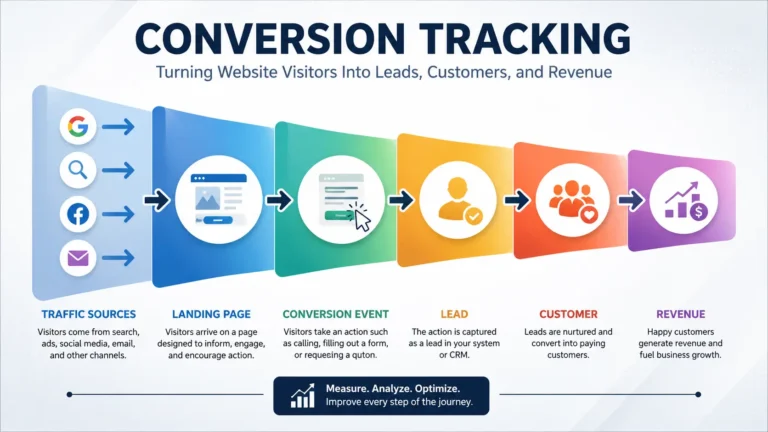
Call tracking is a form of conversion tracking. A conversion is a meaningful action that moves a person closer to becoming a customer. For a local business, that action may be a phone call, form submission, appointment request, quote request, direction request, or booking.
Phone calls can be tracked in several ways. A business may track calls from ads, calls from a website, clicks on mobile phone buttons, calls from landing pages, and calls from a Google Business Profile. Google Ads supports phone call conversion tracking for calls generated by ads and websites, while Google Business Profile performance reporting can show customer actions such as calls from the profile.
Call Tracking and Local SEO
Call tracking must be handled carefully in local SEO because name, address, and phone number consistency still matters. A business should avoid spreading random tracking numbers across important citations, directories, and business listings.
The safest basic approach is to keep the main business phone number consistent across major listings and use tracking numbers in controlled places such as ads, landing pages, and properly configured website tracking. CallRail also warns that NAP consistency means the business name, address, and phone number should remain accurate across digital platforms, and its own documentation discusses methods for maintaining NAP consistency when call tracking is used.
Common Call Tracking Metrics
Call tracking can measure more than the number of calls. Depending on the system, a business may be able to review the source of the call, the campaign, the landing page, the caller area code, the time of day, the call duration, whether the call was answered, and whether the call became a qualified lead.
Call duration can be useful, but it should not be treated as perfect proof of lead quality. A long call may be valuable, but it may also be a customer service issue. A short call may be a bad lead, or it may be a quick appointment booking. The best systems combine call tracking data with real business judgment.
Common Mistakes With Call Tracking
- One common mistake is not tracking calls at all. This leaves a major blind spot in local marketing reports. A campaign may look weak in analytics because it does not produce many form submissions, even though it is generating valuable phone calls.
- Another mistake is using too many phone numbers without a clear plan. This can create confusion for customers, staff, and search engines. Tracking numbers should be used intentionally, not randomly.
- A third mistake is counting every call as a good lead. Some calls are spam, wrong numbers, existing customers, sales calls, or support requests. A business should separate total calls from qualified calls whenever possible.
- Another mistake is failing to answer the phone. Call tracking may reveal that marketing is working, but the business is missing calls. In that case, the problem is not traffic. The problem is lead handling.
How to Use Call Tracking Properly
To use call tracking properly, start with the main question the business needs answered. For example, does the business need to know whether Google Ads is producing calls? Does it need to compare SEO calls against PPC calls? Does it need to know which landing pages produce the best leads?
Once the goal is clear, tracking should be set up around that goal. A small local business does not need an overly complicated setup at the beginning. It may only need to track website calls, Google Ads calls, and Google Business Profile calls.
The main business phone number should remain consistent on important local listings. Tracking numbers should be used where they can be controlled, measured, and maintained properly. Call tracking should also be reviewed regularly. The goal is not just to collect data. The goal is to make better decisions about marketing, budget, website pages, ads, and lead handling.
Why Call Tracking Is Important for Paid Ads
Call tracking is especially important for Google Ads because each click costs money. If a business is paying for traffic, it needs to know whether that traffic is producing calls. Google Ads can track calls from call assets, call ads, and phone numbers on a website. Google’s documentation explains that call conversion tracking can help advertisers understand how effectively ads lead to phone calls.
This helps a business avoid judging campaigns only by clicks. A campaign with a lower click-through rate may still be valuable if it produces high-quality phone calls. A campaign with many clicks may be wasteful if those clicks do not turn into calls, bookings, or sales.
Why Call Tracking Is Important for Landing Pages
- Landing pages are often built to generate one specific action. For local businesses, that action is often a call. Call tracking helps show whether the page is doing its job.
- If a landing page gets traffic but no calls, the business may need to improve the headline, call-to-action, trust signals, offer, page speed, mobile layout, or phone number visibility.
- If a landing page produces many calls but few booked jobs, the issue may be lead quality, pricing, call handling, or follow-up. Call tracking helps separate marketing problems from sales process problems.
Call Tracking and Lead Quality
The best use of call tracking is not just counting calls. The better use is understanding call quality. A business should ask whether the call came from a real potential customer, whether the person needed the service offered, whether the call was answered, whether the caller booked, and whether the job produced revenue.
This is where call tracking becomes more valuable than basic analytics. Website traffic tells you that people arrived. Call tracking helps show whether those visitors became real conversations.
Simple Call Tracking Checklist
- Identify which calls you need to track first.
- Keep your main business phone number consistent across major listings.
- Use tracking numbers carefully on ads and landing pages.
- Track click-to-call buttons on mobile pages.
- Separate total calls from qualified leads.
- Review missed calls and unanswered calls.
- Compare calls by source, page, and campaign.
- Use call data to improve ads, landing pages, and local SEO pages.
- Do not rely on call volume alone.
- Check call tracking reports regularly.
Final Thoughts
Call tracking helps local businesses connect marketing activity to real phone leads. It shows which ads, pages, listings, and campaigns are producing calls instead of only showing traffic or clicks.
Used properly, call tracking can help a business spend money more wisely, improve landing pages, measure local SEO performance, and understand where real leads are coming from.
The key is to track calls without creating confusion. Keep important business information consistent, use tracking numbers carefully, and focus on qualified calls instead of raw call volume.
External References
- Google Ads Call Conversion Tracking Documentation
- Google Ads Conversion Tracking Overview
- Google Analytics 4 Documentation
- Google Tag Manager Help Center
- Google Business Profile Help Center
- CallRail – Call Tracking
- WhatConverts Blog
- HubSpot Guide to Call Tracking
Related Glossary Terms:
Conversion rate
Conversion tracking
PPC
Landing pages
Lead generation
Google Ads
Google Business Profile
Analytics
NAP consistency
Local SEO
Call-to-action
Lead quality