Local Ranking Signals and Other
Google Changes Influence
Maps Rankings, Visibility,
and Local Leads
For most local businesses, Google visibility directly affects who gets the phone call, who receives the quote request, and who wins the customer. When someone searches for a plumber, roofer, electrician, dentist, lawyer, HVAC company, landscaper, or other local service provider, they usually do not compare twenty different businesses. They look at the first few results, check reviews, scan the business profile, and make a fast decision.
That means Google is not just a search engine for local businesses. It is often the front door to the business. However, local search is changing quickly. Google is adjusting how local results are displayed, how reviews are interpreted, how business profiles are evaluated, how AI-generated answers appear, and how users interact with search results before they ever reach a website.
Because of this, local SEO is no longer just about adding a few keywords to a website or claiming a Google Business Profile. Local businesses now need to understand how Google’s newer systems affect visibility, Maps rankings, click-through rates, and inbound lead volume. This article breaks down 11 important Google changes and ranking signals that are influencing local SEO and local lead generation.
Why These Google Changes Matter for Local Businesses
Local search traffic is valuable because it usually comes from people with immediate intent. A person searching for “emergency plumber near me” is not casually researching plumbing. A homeowner searching for “roof repair company in Winnipeg” is likely dealing with a real problem. A parent searching for “family dentist accepting new patients” may be ready to book an appointment.
These searches are close to the money. When your business appears prominently in Google Maps, the Local Pack, or localized organic search results, you have a much better chance of turning that search into a phone call or lead. When your business drops lower, even slightly, lead volume can decline quickly.
This is why Google changes matter. A small shift in layout, ranking interpretation, review weighting, or AI visibility can affect how many people see your business, how many people click, and how many people contact you.
How Google Determines Local Visibility
Before looking at the 11 changes, it helps to understand the foundation of local rankings. Google has traditionally explained local rankings through three major concepts: relevance, distance, and prominence. Relevance means how closely your business matches what the searcher wants. If someone searches for furnace repair, Google wants to show businesses that clearly provide furnace repair, not general home improvement companies with vague service pages.
Distance means how close your business is to the searcher or to the location named in the search. This is why two people in different parts of the same city may see different Maps results. Prominence means how trusted and established your business appears online. Reviews, backlinks, citations, brand mentions, website quality, and overall reputation all contribute to prominence.
Those three pillars still matter. However, Google’s newer systems are adding more complexity on top of them. Artificial intelligence, review analysis, mobile behavior, user engagement, search intent matching, and AI-generated summaries are all changing the way local businesses compete.
1. Google Is Showing Fewer Businesses in Some AI-Enhanced Local Results
One of the biggest changes affecting local visibility is the rise of AI-enhanced search results. Google has been moving toward search experiences that summarize information, predict user needs, and display fewer but more carefully selected options. In local search, this can mean fewer businesses receiving prominent exposure.
In the past, a business might have had a reasonable chance of getting noticed by appearing in the traditional Local Pack or somewhere near the top of organic results. Today, mobile screens are more crowded, AI summaries take up space, paid placements appear prominently, and Google may highlight only a small number of businesses in certain search experiences.
This creates a higher standard for visibility. If Google’s systems are choosing fewer businesses to display, then each business needs stronger trust signals, clearer relevance, better reviews, stronger profile optimization, and a better website experience. For local business owners, the practical lesson is simple. Being “somewhat optimized” is becoming less effective. Google’s newer search environment rewards businesses that look complete, active, trustworthy, and highly relevant.
2. Google Business Profile Optimization Now Carries More Weight
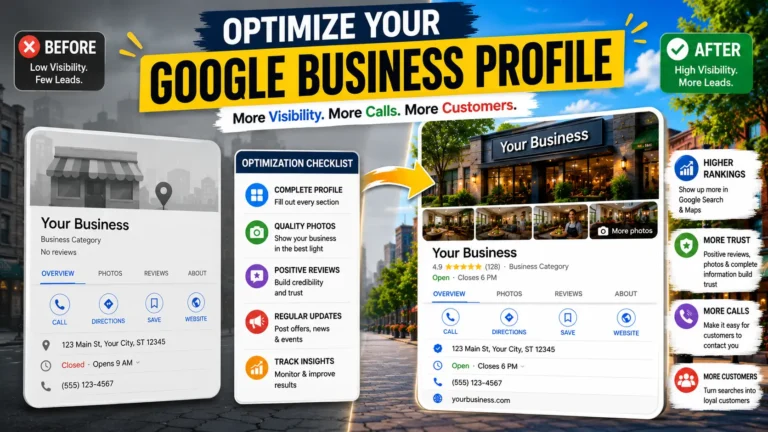
Your Google Business Profile is one of the most important assets in local SEO. For many potential customers, it is the first thing they see before they ever visit your website. It shows your business name, reviews, photos, hours, services, location, phone number, website link, and sometimes even questions and answers. Google also uses this profile to understand what your business does.
Your primary category helps Google classify your business. Your secondary categories add more context. Your services explain what you offer. Your photos help confirm that your business is active and real. Your hours help Google determine whether you are available when someone searches. Your reviews help Google understand customer satisfaction and service relevance.
A weak or incomplete profile can reduce visibility, even if your website is decent. For example, a roofing company that selects a vague category, rarely updates photos, ignores reviews, and lists incomplete services may struggle against a competitor with a complete, active, well-maintained profile.
This change matters because Google increasingly relies on business profile data to match local businesses with search intent. Your profile should not be treated as a one-time setup task. It should be maintained as an active local search asset.
3. Google Is Reading Review Content More Deeply
Reviews are no longer just about star ratings. For years, many business owners focused mainly on getting more five-star reviews. Ratings still matter, but Google’s systems have become better at interpreting the actual language inside reviews. This means review content can help Google understand what services your business provides, what locations you serve, and what customers value most about your work.
A review that says “Great service” is helpful, but it gives Google very little detail. A review that says “They repaired our leaking basement pipe in St. James and arrived within an hour” provides much stronger context. That kind of detailed review mentions the service, the problem, the location, and the customer experience. It helps both Google and future customers understand why the business is relevant.
Review recency also matters. A business with steady recent reviews may look more active and reliable than a business with a strong rating but no fresh feedback in two years. For local lead generation, this is powerful. Good reviews help rankings, but they also help conversion. When potential customers see detailed reviews that match their own problem, they are more likely to call.
4. Google Is Paying More Attention to Click-Through and Engagement Signals
Google wants to show results that satisfy users. If searchers consistently click a business listing, engage with its profile, visit its website, and do not immediately return to search results, those actions can reinforce the idea that the business is a strong match. This means local SEO is not only about technical optimization. It is also about how appealing your search presence looks to real people.
Your business name, review rating, number of reviews, photos, service descriptions, opening hours, and overall profile presentation can all influence whether someone clicks. Once the visitor reaches your website, the experience must continue to support confidence. If the site loads slowly, hides the phone number, looks outdated, or fails to explain services clearly, visitors may leave quickly.
That poor engagement can weaken performance over time. This is where SEO and conversion optimization begin to overlap. Your rankings help bring visitors in, but your presentation determines whether they stay, trust you, and take action.
5. Local Services Ads Are Pushing Organic Results Lower
Google’s Local Services Ads have changed the layout of search results for many service industries. These ads often appear at the very top of the page with trust elements such as Google Guaranteed badges, review ratings, and direct contact options. For industries like plumbing, HVAC, roofing, legal services, locksmithing, and home repair, this can significantly reduce the visibility of traditional organic results.
Even if a business ranks well organically, it may now appear below paid placements, Maps results, AI summaries, or other search features. This does not mean local SEO is no longer valuable. It means the search results page has become more competitive. Businesses now need to think about total search visibility rather than just one ranking position.
A strong local strategy may include Google Business Profile optimization, organic SEO, review generation, Local Services Ads, Google Ads, and conversion-focused landing pages. The businesses that understand this broader search landscape are usually better positioned to protect lead volume when Google changes the layout.
6. Mobile Experience Is Now Directly Connected to Local Lead Flow
Most local searches happen on mobile devices. This matters because mobile users behave differently from desktop users. They want quick answers, easy contact options, fast-loading pages, clear directions, and simple navigation. A website can technically be mobile-friendly and still perform poorly. If the text is hard to read, buttons are too small, pages load slowly, or the phone number is difficult to find, users may leave before contacting the business.
Google’s mobile-first approach means the mobile version of your site plays a major role in how your site is evaluated. For local businesses, mobile experience affects both visibility and conversion. A fast, clear, easy-to-use mobile site can support stronger engagement and more calls. A slow or confusing site can waste traffic that was expensive or difficult to earn.
This is especially important for emergency and high-intent searches. If someone needs a plumber, locksmith, towing company, or furnace repair service, they are not going to struggle with a poor website. They will simply go back to Google and choose someone else.
7. Google Is Rewarding Original, Experience-Based Content
Google is becoming more selective about content quality. Generic content that repeats the same basic advice found on hundreds of other websites is becoming less useful for rankings. Google wants content that adds something valuable, practical, and original.
This is sometimes described as information gain. In simple terms, Google wants to know whether your page contributes something helpful that searchers cannot easily get elsewhere. For local businesses, this creates a major opportunity. A local contractor, dentist, lawyer, roofer, or consultant has real experience that generic content farms do not have.
Real project examples, service explanations, local issues, before-and-after stories, customer questions, and practical advice can all make content stronger. For example, a generic page about roof repair may explain common roof problems. A stronger local page might explain how freeze-thaw cycles, heavy snow, poor attic ventilation, and older housing stock affect roofs in a specific region. That kind of local expertise is more useful, more trustworthy, and more likely to support long-term visibility.
8. E-E-A-T Signals Are Becoming More Important for Local Businesses
Google’s emphasis on Experience, Expertise, Authoritativeness, and Trustworthiness continues to influence search quality. For local businesses, E-E-A-T is not just an abstract SEO concept. It affects whether your business looks credible enough to recommend.
Google wants to connect users with businesses that appear legitimate, experienced, and trustworthy. This is especially important in industries where poor advice or poor service can create serious problems, such as legal services, financial services, medical services, home repairs, and other high-cost decisions. Strong E-E-A-T signals can include transparent contact information, clear service pages, real staff details, licenses, certifications, customer testimonials, project examples, professional photos, strong reviews, and consistent business information across the web.
A business that hides behind thin content and vague claims may struggle to compete with a business that clearly demonstrates experience and credibility. The practical takeaway is that trust must be visible. It is not enough to be good at what you do. Google and potential customers both need to see evidence of it.
9. AI Overviews Are Reducing Some Informational Clicks
AI Overviews are changing how users interact with informational searches. When Google answers a basic question directly in the search results, users may not need to click through to a website. This can reduce traffic to blog posts that answer simple questions.
For example, a local HVAC company may have a blog post explaining how often to change a furnace filter. If Google’s AI Overview answers that question directly, fewer people may visit the article. This does not mean informational content is useless. It means businesses need to be more strategic. Simple informational articles may attract fewer clicks, but deeper content that connects education to buyer intent can still perform well. The goal is to answer the question while also guiding the reader toward the next logical step.
For local businesses, this means content should not only explain what something is. It should help the visitor understand when the issue matters, what risks are involved, when professional help is needed, and how to take action. AI may answer basic facts, but it cannot replace trust, local relevance, service credibility, and a strong reason to contact your business.
10. Google Is Becoming More Aggressive About Search Intent Matching
Google is getting better at understanding what users really want. A search query is no longer interpreted only by the words typed into the search box. Google tries to understand the intent behind those words.
If someone searches for “water heater leaking,” Google may understand that the person could need emergency help, repair advice, replacement information, cost estimates, and a local plumber. A weak article that only defines the problem may not fully satisfy that intent. This is why thin service pages often struggle.
A strong page should answer the obvious question and the follow-up questions that naturally come next. It should explain the problem, show possible causes, clarify when the issue is urgent, describe available services, build trust, and make the next step easy. For local SEO, this means every important service page should be built around the full customer journey. The best pages do not simply say, “We provide this service.” They explain the customer’s problem in plain language, demonstrate expertise, reduce uncertainty, and guide the visitor toward contacting the business.
11. Google Is Connecting User Satisfaction More Closely With Lead Generation Signals
The final change is one of the most important. Google is increasingly focused on whether users are satisfied with the results they choose. This means visibility, user experience, trust, and conversion are becoming more connected. If users click your listing but quickly leave, that may suggest the result did not meet expectations. If users engage with your site, click to call, request directions, read service pages, or spend time reviewing your information, those actions suggest stronger satisfaction.
This is why local SEO can no longer be separated from conversion strategy. A business may rank well but still lose leads if the website fails to build confidence. Poor headlines, weak service pages, missing phone numbers, outdated photos, slow pages, confusing navigation, and weak calls to action can all reduce results.
The businesses that win in local search usually do more than rank. They create a complete path from search visibility to trust to action. That path begins when the customer sees the business in Google. It continues through the Google Business Profile, reviews, website experience, service pages, contact options, and follow-up process. Local SEO is no longer only about being found. It is about being chosen.
Common Mistakes That Hurt Local Rankings and Leads
Many local businesses lose visibility because of preventable problems. One of the most common mistakes is inconsistent business information. If your business name, address, or phone number appears differently across your website, Google Business Profile, directories, and social profiles, it can weaken trust signals.
Another common mistake is choosing the wrong Google Business Profile category. Since categories help Google understand what your business does, poor category selection can reduce visibility for important searches. Some businesses also neglect reviews. They may have happy customers, but they do not have a consistent process for asking for feedback. Over time, this can make the business appear less active than competitors with fresh reviews.
Thin service pages are another issue. A page with only a few generic paragraphs usually does not provide enough information to satisfy search intent or build trust. Mobile problems also reduce results. A business may think its website is fine because it looks acceptable on a desktop computer, but most local users are searching from phones. These issues may seem small individually, but together they can reduce rankings, clicks, calls, and revenue.
How Local Businesses Should Respond to These Google Changes
The best response is not to chase every minor algorithm change. Instead, local businesses should focus on building a stronger overall search presence. Your Google Business Profile should be complete, accurate, active, and aligned with your most important services. Your website should clearly explain what you do, where you do it, and why customers should trust you. Your service pages should answer real customer questions and guide visitors toward action.
Reviews should be generated consistently and ethically. Your business information should remain consistent across the web. Your mobile experience should be fast and simple. Your content should demonstrate real expertise rather than repeating generic advice. Most importantly, your marketing should connect visibility to measurable leads. Rankings are useful, but rankings alone are not the final goal. The real goal is more qualified calls, form submissions, appointments, and customers.
Final Thoughts
Google’s local search environment is changing quickly. AI-powered results, Local Services Ads, review analysis, mobile-first behavior, E-E-A-T expectations, search intent matching, and changing user behavior are all reshaping how local businesses get found.
The businesses most likely to succeed are the ones that treat local SEO as an ongoing system rather than a one-time task. That system includes profile optimization, review management, website improvement, helpful content, mobile usability, lead tracking, and conversion optimization.
Local visibility still matters, but visibility alone is not enough. The real advantage belongs to businesses that can appear in search, earn trust quickly, satisfy user intent, and turn that attention into real leads.
Related Articles
How Google Maps Rankings Work
Google Business Profile Optimization Guide
How Online Reviews Influence Local Rankings
Local Ranking Factors
Search Intent