SEO vs PPC: What’s the Difference?
SEO and PPC are the two main components of Search Engine Marketing (SEM). SEO focuses on improving a website’s visibility in organic search results, while PPC involves paying for advertisements that appear in search engines. Both strategies help businesses attract visitors from search engines, but they work in different ways and offer different advantages.
This article is part 3 of the series: The Foundation of Online Marketing for Local Businesses
Start Here:
Beginner’s Guide to Search Engine Marketing
Previous Article:
What is Search Engine Marketing
Understanding the Two Core SEM Strategies
Search Engine Marketing includes two primary methods for appearing in search results:
- Search Engine Optimization (SEO)
- Pay-Per-Click advertising (PPC)
Both strategies aim to help businesses become visible when people search online. However, the way they achieve this visibility is different.
What is SEO?
SEO stands for Search Engine Optimization. SEO focuses on improving a website so it appears in the organic, non-paid search results. Organic results are the listings that appear naturally based on relevance and quality. Businesses do not pay for individual clicks from organic search results. Instead, they invest in improving their website so search engines consider it helpful for users.
SEO typically involves:
- creating helpful content
- optimizing website structure
- improving page speed
- earning links from other websites
- using relevant keywords
- providing a good user experience
SEO often takes time to produce results, but it can generate consistent traffic over the long term.
What is PPC?
PPC stands for Pay-Per-Click advertising. PPC allows businesses to place advertisements in search engine results. Google Ads is one of the most common PPC platforms. Advertisers select keywords related to their services. When someone searches for those keywords, ads may appear near the top of search results. Businesses typically pay when someone clicks the advertisement.
PPC allows advertisers to:
- control budgets
- target specific audiences
- appear quickly in search results
- test marketing messages
- generate leads faster
Because PPC traffic can begin quickly, many businesses use PPC when they want faster results.
Key Differences Between SEO and PPC
Although SEO and PPC both help businesses appear in search results, they differ in several important ways.
SEO Characteristics
- traffic is earned through optimization
- results may take time
- clicks are not paid individually
- content quality plays an important role
- results may continue long-term
PPC Characteristics
- traffic is purchased through advertising
- visibility can begin quickly
- advertisers pay per click
- budgets can be adjusted
- results depend on ad performance
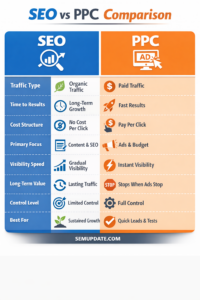 SEO vs PPC Comparison Table
SEO
organic traffic
long-term strategy
content driven
no cost per click
takes time to build visibility
PPC
paid traffic
short-term visibility possible
budget controlled
pay per click
traffic can begin quickly
When Businesses Use SEO
Businesses often invest in SEO when they want to build long-term visibility.
SEO can be helpful for:
- educational content
- service pages
- blog articles
- resource guides
- informational searches
SEO works well when businesses want ongoing traffic without paying for each click.
When Businesses Use PPC
Businesses often use PPC when they want faster results or more immediate visibility.
PPC can be helpful for:
- new websites
- time-sensitive promotions
- testing keywords
- competitive industries
- lead generation campaigns
Because Pay-Per-Click advertising allows control over budget and targeting, it can be adjusted based on performance.
Can SEO and PPC Work Together?
Many businesses use both strategies together. SEO can build long-term traffic, while PPC can generate traffic quickly. Using both approaches can provide more visibility in search results.
Example:
A business might rank organically for certain keywords while also running ads for competitive keywords. This can increase the chances of attracting potential customers.
Which Strategy is Better?
The best approach depends on business goals, timeline, and resources. Some businesses prioritize long-term growth. Others focus on immediate lead generation. Many businesses use a combination of both strategies.
Understanding how each method works helps businesses make informed decisions.
Simple Example
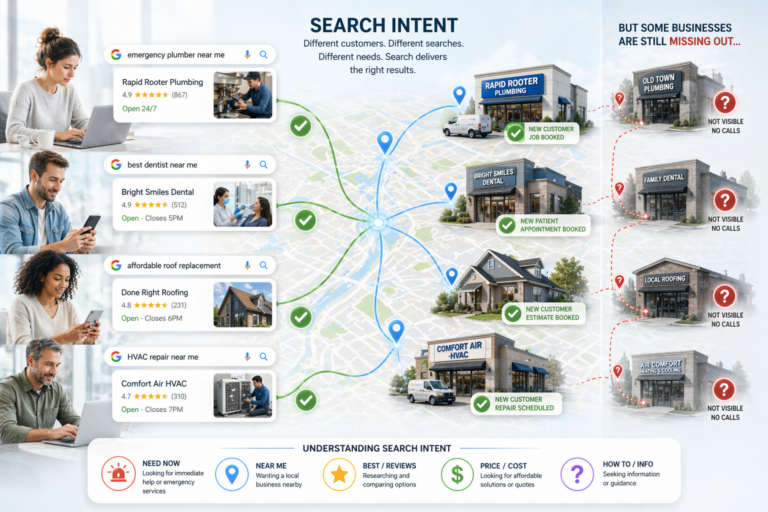
Imagine someone searches for: “emergency plumber near me”
SEO result: a plumbing company’s website appears organically.
PPC result: an advertisement appears at the top of the page.
Both results can lead to a website visit or phone call.
How SEO and PPC Fit Into Search Engine Marketing
Search Engine Marketing includes both SEO and PPC strategies. Both aim to connect businesses with people searching online. Understanding how each component works helps build a stronger marketing strategy.
FAQ Section
SEO focuses on improving organic search rankings, while PPC involves paying for advertisements that appear in search results.
Both strategies offer advantages. SEO can generate long-term traffic, while PPC can provide faster visibility.
Many businesses use both strategies together to improve overall visibility in search results.
Paid advertising does not directly improve organic rankings, but both strategies can complement each other.
PPC can generate traffic quickly, while SEO typically requires time to build rankings.
What You Will Learn Next
Now that you understand the difference between SEO and PPC, the next step is learning how search engines determine which pages appear in results.
Continue reading: How Search Engines Work – A Step-By-Step Guide