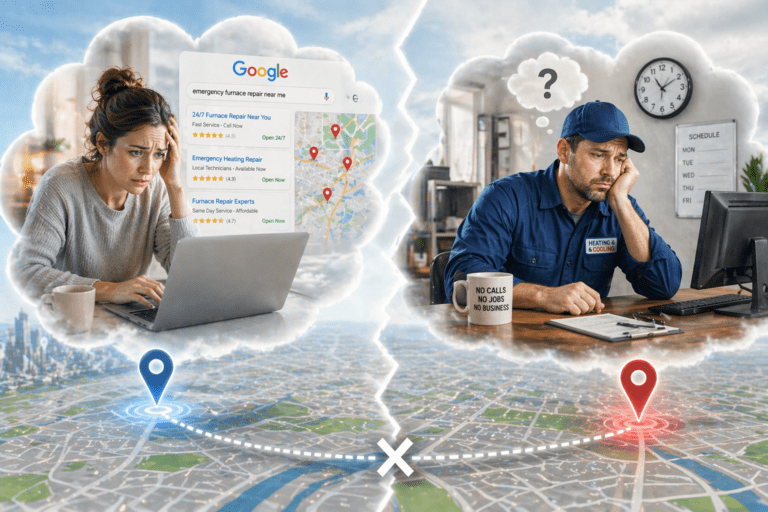
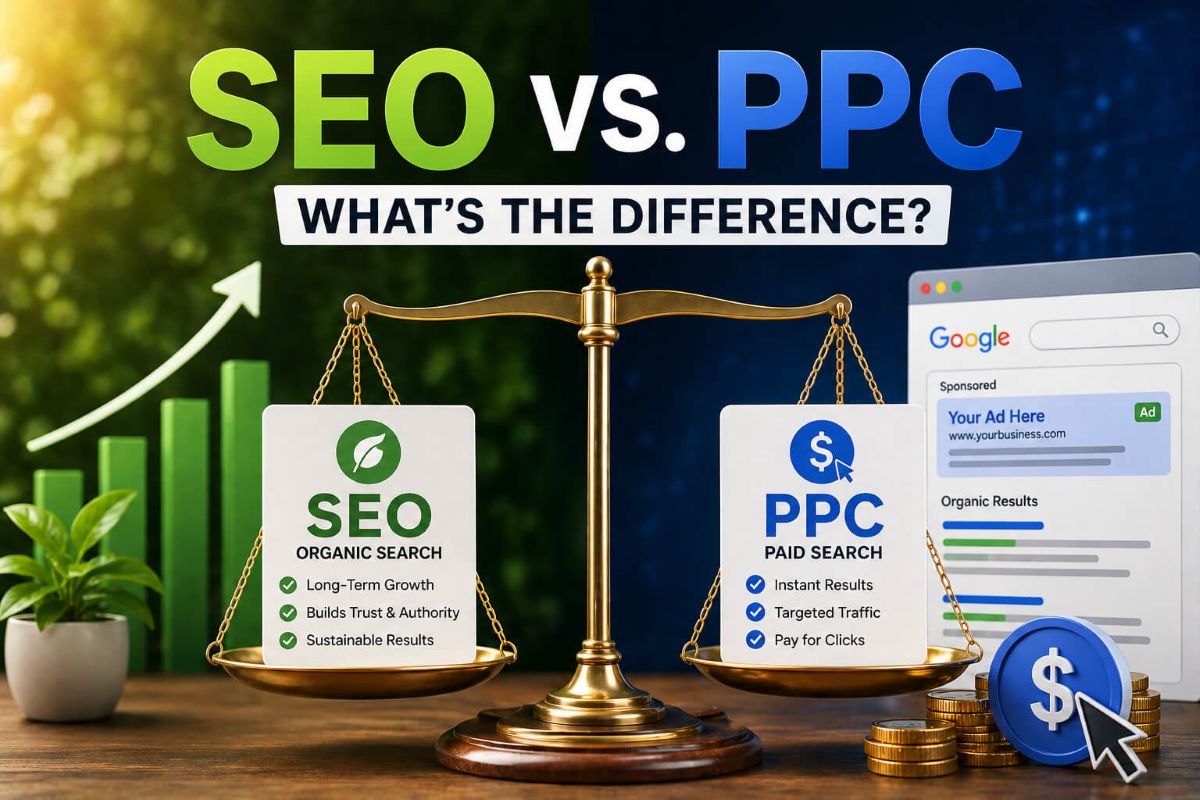
SEO and PPC are the two main components of Search Engine Marketing (SEM). SEO focuses on improving a website’s visibility in organic search results, while PPC involves paying for advertisements that appear in search engines. Both strategies help businesses attract visitors from search engines, but they work in different ways and offer different advantages.
This article is part 3 of the series: The Foundation of Online Marketing for Local Businesses
Start Here: Beginner’s Guide to Search Engine Marketing
Previous Article: What is Search Engine Marketing
SEO vs PPC: What’s the Difference?
Search Engine Marketing (SEM) is one of the most effective ways for businesses to attract customers online. Within SEM, two primary strategies dominate: Search Engine Optimization (SEO) and Pay-Per-Click (PPC) advertising.
At a glance, both approaches help businesses appear in search engine results. However, the difference between SEO and PPC lies in how traffic is generated, how quickly results appear, and how sustainable those results are over time. Understanding SEO vs PPC is essential for any business owner who wants to increase visibility, generate leads, and make smarter marketing decisions.
What Is SEO (Search Engine Optimization)?
Search Engine Optimization focuses on improving a website so it appears in organic (non-paid) search results. These listings are ranked by search engines like Google based on relevance, quality, and user experience. Unlike paid advertising, businesses do not pay for each click from organic traffic. Instead, SEO involves building a strong online presence that search engines trust over time.
SEO typically includes optimizing website structure, improving page speed, creating helpful content, earning backlinks from other websites, and targeting relevant keywords that people are actively searching for. Although SEO takes time to produce results, it can generate consistent, long-term traffic and often leads to higher trust from users.
What Is PPC (Pay-Per-Click Advertising)?
Pay-Per-Click advertising allows businesses to place ads directly in search engine results. Platforms like Google Ads enable advertisers to bid on specific keywords so their ads appear when users search for related terms. With PPC, businesses typically pay each time someone clicks on their advertisement. This makes it possible to generate traffic almost immediately, especially for competitive or high-intent searches.
PPC campaigns allow precise control over budgets, audience targeting, and messaging. Businesses can quickly test different offers, headlines, and landing pages to see what performs best. Because of its speed and flexibility, PPC is often used for immediate lead generation and short-term campaigns.
SEO vs PPC: Key Differences Explained
The main difference between SEO and PPC comes down to how visibility is earned and how traffic is generated. SEO focuses on earning organic rankings over time, while PPC provides paid visibility almost instantly.
Organic vs paid search also reflects how users interact with results. Many users trust organic listings more, while paid ads are often used when immediate visibility is required.
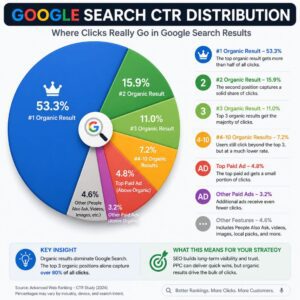
Studies consistently show that organic search results receive the majority of clicks, while paid ads capture a smaller—but still valuable—portion of traffic. This highlights an important dynamic: SEO captures long-term demand, while PPC captures immediate attention.
SEO vs PPC Pros and Cons
When comparing SEO vs PPC pros and cons, each strategy offers distinct advantages depending on business goals. SEO is often considered a long-term investment. It builds authority, increases trust, and continues to generate traffic even when active work slows down. However, it requires patience and consistent effort.
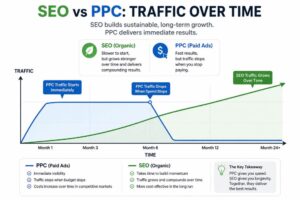
PPC, on the other hand, delivers fast results. Businesses can appear at the top of search results almost immediately. The trade-off is that traffic stops as soon as the advertising budget is paused. The benefits of SEO vs PPC depend on whether a business prioritizes long-term growth or immediate lead generation.
SEO vs PPC Cost Comparison
One of the most important considerations in SEO vs PPC is cost. While SEO does not charge per click, it does require investment in content creation, optimization, and ongoing improvements.
PPC operates on a pay-per-click model, meaning costs are directly tied to traffic. Competitive keywords can become expensive, especially in industries like legal services, home services, or finance.
Over time, SEO can become more cost-efficient as rankings stabilize and traffic compounds. PPC provides predictable and controllable costs, but requires continuous spending to maintain visibility.
When to Use SEO vs PPC
Choosing when to use SEO vs PPC depends on business goals, timeline, and competition. SEO works well for businesses that want to build long-term visibility through blog content, service pages, and educational resources. It is especially effective for capturing informational searches and building authority.
PPC is ideal for new websites, time-sensitive promotions, and highly competitive keywords. It allows businesses to generate leads quickly and test which keywords and offers convert best. For many small businesses, SEO vs PPC is not a choice between one or the other, but a decision about how to balance both.
Should You Choose SEO or PPC? (Quick Decision Guide)
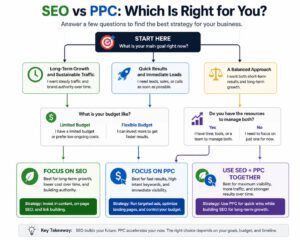
If your goal is to generate leads quickly, PPC can deliver immediate results. If you are focused on long-term growth and reducing cost per acquisition over time, SEO is often the better investment.
Businesses with limited budgets often start with SEO, while those with available capital may use PPC to accelerate results while building organic visibility in parallel.
Can SEO and PPC Work Together?
Search engine marketing SEO vs PPC strategies are most powerful when used together. Rather than competing, they complement each other. For example, a business might use PPC to target high-converting keywords while simultaneously building SEO content to rank organically for the same terms over time.
This dual approach increases visibility, reinforces brand presence, and captures both immediate and long-term opportunities.
SEO vs PPC: Which Is Better for Your Business?
The question of SEO vs PPC which is better depends entirely on your business objectives. If you need immediate traffic and leads, PPC provides a faster path. If you want sustainable growth and long-term authority, SEO offers greater long-term value. In most cases, the strongest strategy is a combination of both—using PPC for speed and SEO for stability.
Simple Real-World Example
Imagine someone searches for “emergency plumber near me.” A PPC ad may appear at the top of the page, giving a plumbing company instant visibility. At the same time, organic SEO results may show trusted local businesses that have built authority over time. Both results can generate calls and leads. The difference is how those positions were achieved—and how sustainable they are.
How SEO and PPC Fit Into Search Engine Marketing
Search engine marketing combines both SEO and PPC to connect businesses with people actively searching for solutions. Understanding how these strategies work together allows businesses to build a more complete and effective marketing system—one that captures demand today while building authority for tomorrow.
Next Article: How Search Engines Work in 3 Steps