Understanding the Pages Google Displays After a Search
SERPs, or Search Engine Results Pages, are the pages displayed by search engines after someone enters a search query. Every time a user searches Google for information, a business, a product, or a service, Google generates a SERP containing the results it believes are most relevant to that search.
For local businesses, understanding SERPs is important because these pages determine how potential customers discover your business online. Whether someone clicks your website, calls your business,requests directions, or contacts a competitor often depends on what appears in the search results.
What Are SERPs?
A SERP is the complete page of results displayed after a search is performed. While many people think search results only contain website links, modern SERPs include a wide variety of features designed to help users find answers quickly. Depending on the search, a SERP may contain:
- Organic search results
- Google Ads
- Local Pack listings
- Google Maps results
- Featured snippets
- Knowledge panels
- Image results
- Video results
- Frequently Asked Questions (FAQs)
- People Also Ask boxes
- Shopping results
- Review ratings and business information
Google constantly adjusts SERPs to match what users are trying to accomplish. The results shown forone search may look completely different from the results shown for another.
How SERPs Work
When someone performs a search, Google’s algorithms analyze the words used in the query, the searcher’s location, previous search behavior, device type, and overall search intent. Google then decides which combination of results will best satisfy the user’s needs.
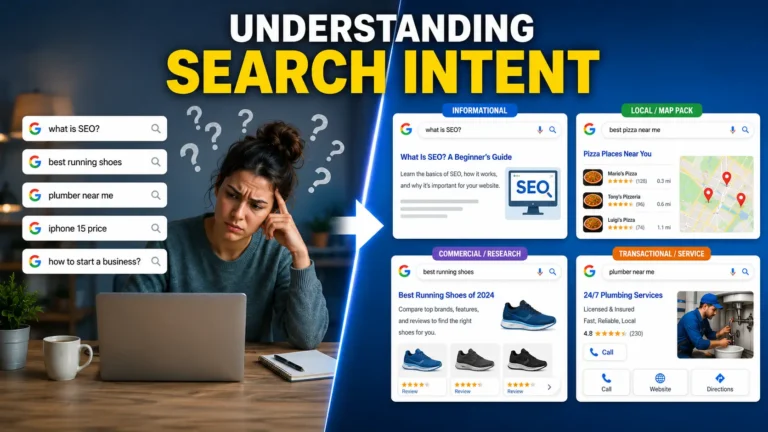
For example, a search for “how does local SEO work” is informational in nature. Google will usually display articles, guides, videos, and educational content. A search for “plumber near me” has strong local intent. Google typically prioritizes the Local Pack,Google Maps listings, reviews, business profiles, and local service providers.
A search for “buy running shoes online” has commercial intent. Google may display shopping results,product listings, advertisements, and e-commerce websites. The goal is always the same: provide the most useful answer as quickly as possible.
Types of SERP Features
Modern SERPs contain many specialized features that can increase visibility beyond traditional rankings.
- Organic Search Results – These are the standard website listings that appear naturally based on Google’s ranking algorithms.Strong SEO helps businesses earn higher positions in these results.
- Google Ads – Paid advertisements often appear at the top or bottom of the page. Businesses bid on keywords to gain visibility for specific searches.
- Local Pack – The Local Pack usually displays three local businesses along with maps, reviews, phone numbers, and directions. This section is highly valuable for local businesses because it often receives significant user attention.
- Featured Snippets – Featured snippets provide quick answers directly within the search results. These often appear above traditional organic rankings and are sometimes called “Position Zero.”
- People Also Ask – This section contains related questions users commonly search for. Expanding these questions can reveal additional opportunities for content creation.
- Knowledge Panels – Knowledge Panels appear on the right side of desktop search results and provide information about businesses, organizations, people, and brands.
Why SERPs Matter for Local Businesses
SERPs are often the first interaction potential customers have with your business. Before someone visits your website or contacts you, they typically see your search listing, reviews,ratings, business profile, or map listing. Your visibility within SERPs can directly influence:
- Website traffic
- Phone calls
- Lead generation
- Appointment bookings
- Direction requests
- Brand awareness
- Customer trust
- Revenue growth
If competitors dominate the search results while your business is difficult to find, potential customers may never discover you, regardless of the quality of your products or services.
Example of SERPs in Action
Imagine a customer searches for “best pizza near me.” The resulting SERP may include:
- A Google Map showing nearby restaurants
- A Local Pack featuring three pizza restaurants
- Star ratings and customer reviews
- Restaurant websites
- Food delivery options
- Photos of local pizza restaurants
Google understands that the searcher wants a local business, not a general article about pizza. As a result, local results dominate the page. This illustrates why understanding SERPs is so important. The businesses that match Google’s interpretation of search intent receive the majority of visibility.
Common SERP Mistakes
Many business owners focus on rankings without understanding the overall search results landscape. Some of the most common SERP mistakes include:
- Ignoring Google Business Profile optimization
- Focusing only on website rankings
- Not analyzing competitor visibility
- Creating content that does not match search intent
- Failing to build reviews
- Ignoring mobile search experiences
- Targeting keywords without reviewing the actual SERPs first
Before optimizing for any keyword, it is important to study the current search results and understand what Google already considers relevant.
How to Improve SERP Visibility
Improving visibility within search results requires a combination of SEO, local SEO, content creation,reputation management, and user experience optimization. Practical steps include:
- Optimize your Google Business Profile
- Build and manage customer reviews
- Create helpful content that matches search intent
- Target relevant local keywords
- Improve website speed and mobile usability
- Build local citations and business listings
- Earn backlinks from trusted websites
- Monitor how competitors appear in search results
The more closely your content aligns with what Google wants to display for a particular search, the better your chances of earning visibility across multiple SERP features.
The Future of SERPs
Search results continue to evolve as Google introduces AI-generated answers, enhanced local search features, interactive results, and new search experiences. Businesses that focus on providing useful information, maintaining accurate business profiles, and building trust signals are more likely to remain visible as SERPs continue to change.
Rather than chasing rankings alone, successful local businesses focus on owning as much search visibility as possible across organic results, maps, reviews, and emerging SERP features.
Related Glossary Terms:
Search Intent
Local Pack
Google Maps Ranking
Featured Snippet
Google Business Profile
SEO
Organic Search Results
Search Visibility