How Businesses Get Customers From Google
Understanding Search Intent,
Keywords,
and the Customer Journey
This article is part of the series: The Foundation of Online Marketing for Local Businesses
Start Here: Beginner’s Guide to Search Engine Marketing
Previous Article: How Search Engines Work
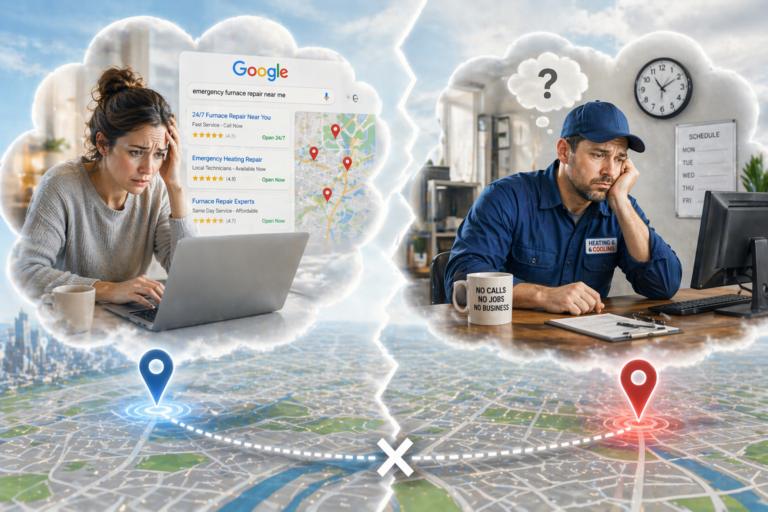
Businesses get customers from Google by appearing in search results when people look for solutions to problems. Every day, potential customers use search engines to find services, compare providers, and learn about possible solutions before making decisions. When someone types a search into Google, they are usually trying to solve a problem or answer a question. Google’s role is to connect that person with the most relevant and helpful information available.
For local businesses, this creates an opportunity to appear in front of potential customers at the exact moment those customers are actively looking for help. Someone searching for a service often has a clear need, and that need frequently leads to a phone call, form submission, or appointment booking. Businesses that understand how Google connects customers to services can position themselves more effectively and improve their chances of being chosen.
This process is not random or mysterious. It is based on understanding what people search for, why they search, and how search engines determine which pages are most relevant.
Understanding Search Intent
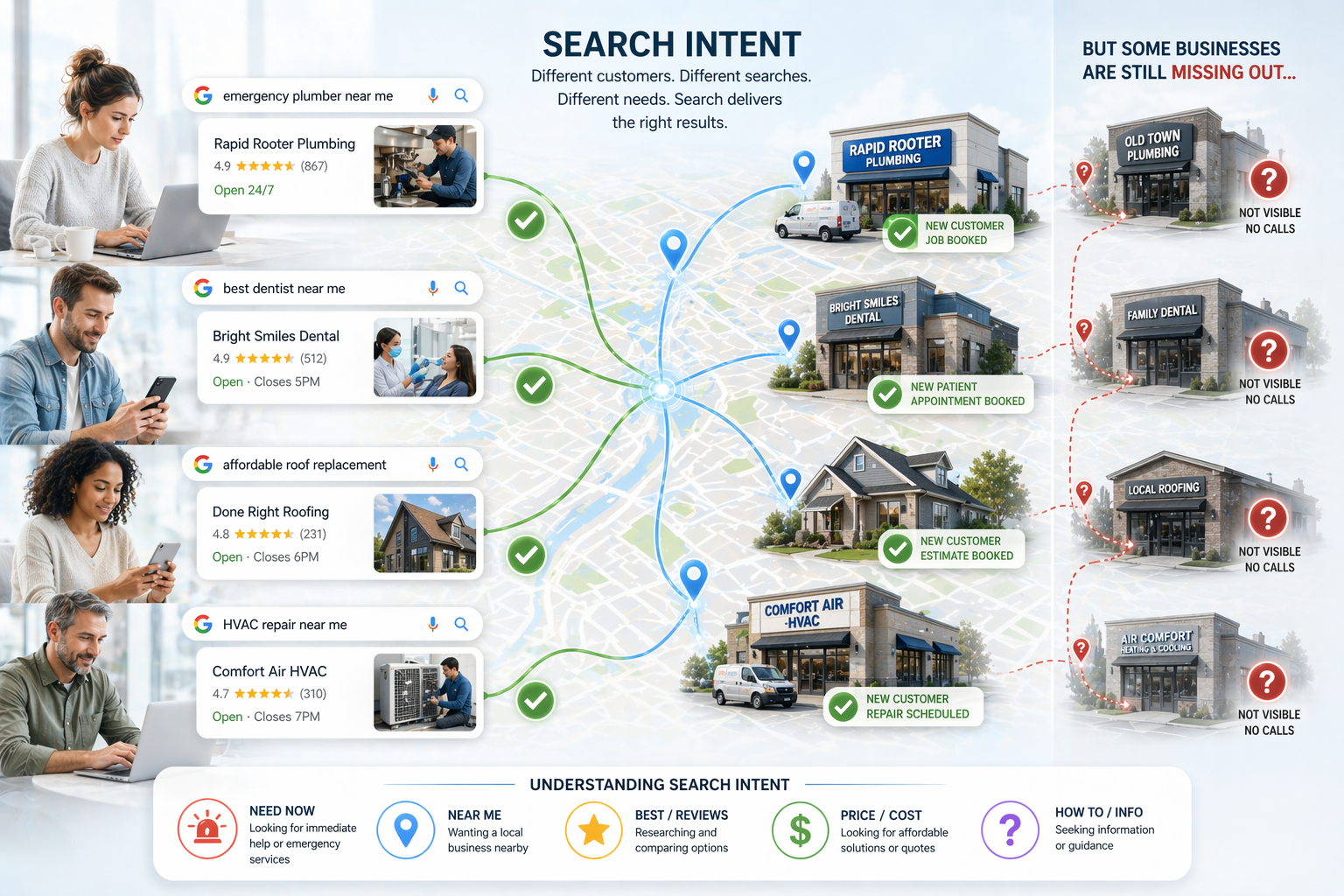
Search intent refers to the reason a person performs a search. When someone enters words into Google, they usually have a specific goal in mind. Sometimes that goal is to learn about a problem. In other situations, the goal is to find a service provider, compare options, or take action immediately.
Understanding intent is important because Google attempts to show results that best match what the searcher wants. If someone searches for general information, Google tends to display educational articles. If someone searches for a local service, Google is more likely to display local business listings and service pages.
Businesses that align their content with the intent behind a search are more likely to appear in results and attract visitors who are genuinely interested in what they offer.
Not all searches are equally valuable from a marketing perspective. Some searches indicate curiosity, while others indicate urgency. For example, a search about general home maintenance tips suggests early-stage interest, while a search for emergency repair services suggests the user is ready to contact a business. Recognizing these differences helps businesses decide what type of content to create.
Types of Search Intent
Search intent can generally be grouped into four categories, each representing a different stage of the decision-making process.
Informational searches occur when someone wants to learn more about a topic. A person may search for general advice, explanations, or background information. These searches often happen early in the process before a decision has been made. Educational content helps introduce potential customers to a business and can build trust by demonstrating knowledge and expertise.
Navigational searches occur when someone is looking for a specific company or website. In this situation, the searcher already knows the name of the business and wants to locate its website, contact information, or location. Businesses benefit from ensuring their website is easy to find and clearly identified.
Commercial searches happen when someone is comparing options. The searcher may be evaluating providers, reading reviews, or researching services before making a decision. Content that explains differences between services or highlights benefits can help guide users during this stage.
Transactional searches occur when someone is ready to take action. These searches often include words that suggest urgency or intent to hire a provider. Pages that clearly explain services and provide easy contact options perform well for this type of search.
Understanding these categories helps businesses create content that meets potential customers at different points in their decision process.
Keywords Connect Customers and Businesses
Keywords are the words and phrases people type into search engines when looking for information or services. Search engines analyze these words to determine which pages are most relevant. Businesses create content that includes terms related to their services so that search engines can better understand what the page is about.
When the language used on a website matches the language used by potential customers, the likelihood of appearing in search results increases. Keywords act as a bridge between the customer’s need and the business offering the solution.
Choosing keywords carefully is important because different phrases may indicate different levels of interest. Some keywords suggest the searcher is gathering information, while others suggest the searcher is ready to contact a business. Understanding this distinction helps businesses prioritize which topics to cover on their websites.
Specific phrases often provide clearer signals about what the customer wants. For example, a detailed search phrase usually reflects a more defined need. These types of searches may attract visitors who are more likely to take action.
How Google Matches Searches With Results
Google uses a complex system to decide which pages appear in response to a search. The goal is to present results that best solve the searcher’s problem. Search engines analyze many factors when determining relevance, including how closely the content matches the search query and how helpful the information appears to be.
Location also plays an important role for local businesses. When someone searches for a nearby service, Google often prioritizes results that are geographically relevant. This allows businesses serving a particular area to appear in front of local customers.
Other factors influencing visibility include website usability, mobile friendliness, page speed, and overall quality of content. Pages that provide clear, helpful information tend to perform better over time.
Businesses do not need to understand every technical detail of search algorithms. However, understanding the general principles behind relevance and usefulness can help guide content decisions.
The Customer Journey From Search to Contact
The customer journey describes the path a person takes from recognizing a problem to contacting a business. Many purchasing decisions follow a predictable sequence that begins with identifying a need and ends with selecting a provider.
At the beginning of the journey, the customer becomes aware of a problem. This awareness often leads to an online search for information. After learning about possible solutions, the customer may begin comparing service providers. Eventually, the customer selects a business and makes contact.
Each step in this journey represents an opportunity for a business to provide helpful information. A website that addresses common questions can guide visitors toward taking the next step.
Understanding the journey allows businesses to create content that supports decision-making rather than simply promoting services. This approach often builds trust and encourages engagement.
Matching Content to Search Intent
Content is more effective when it aligns with the expectations of the searcher. Someone looking for general information expects an explanation, while someone searching for a service expects clear details about what is offered.
Providing the right type of content for each search improves user experience and increases the likelihood that visitors will remain on the site. When users quickly find what they are looking for, they are more likely to consider contacting the business.
Businesses that address both informational and service-related searches often create a more complete online presence. Informational content can attract visitors early in the process, while service pages can convert those visitors into leads later.
Over time, this combination of content supports consistent traffic and steady lead generation.
Why Trust Influences Click Decisions
Search results usually present multiple options, and users must decide which result appears most credible. Even if a page appears in search results, users may choose another listing if it appears more trustworthy or helpful.
Clear page titles, helpful descriptions, professional design, and useful information all contribute to perceived credibility. Visitors often feel more confident contacting businesses that appear knowledgeable and reliable.
Trust develops gradually as users encounter consistent and helpful content. Businesses that focus on providing value rather than simply promoting services often build stronger relationships with potential customers.
Practical Example for Local Businesses
Consider a local accounting firm. Some potential customers may begin by searching for general tax advice, while others may search for help with a specific situation. As the person learns more, they may begin comparing accountants and evaluating options.
Eventually, the person may decide to contact a business directly. A website that includes helpful explanations, service descriptions, and clear contact information can support this entire process.
By creating content that addresses common questions and concerns, the accounting firm increases the likelihood of attracting potential clients through search.
Long-Term Benefits of Understanding Search Behavior
Businesses that understand how customers search online can make better marketing decisions. Instead of guessing what potential customers want, they can focus on topics that reflect real needs.
Over time, helpful content can attract visitors consistently without requiring constant advertising. This can create a more stable flow of inquiries and reduce reliance on unpredictable marketing methods.
Search marketing often becomes more effective as content expands and trust develops.
Key Takeaways
Businesses get customers from Google by understanding what people search for and creating content that aligns with those needs. Search intent helps determine what type of information users expect to find. Keywords help search engines connect users with relevant content. The customer journey describes how people move from recognizing a problem to contacting a business.
When content is helpful and relevant, search engines are more likely to present it to potential customers. Businesses that focus on solving real problems often see better long-term results.
FAQ
Search intent describes the reason someone performs a search. Understanding intent helps businesses create content that matches what users are looking for.
Keywords help search engines understand the topic of a page. Using relevant language increases the likelihood of appearing in search results.
Search marketing helps businesses connect with people who are actively looking for services. This often results in higher quality inquiries compared to many other forms of advertising.
Next Article In This Series: Why Search Marketing Works for Local Businesses