
How Local Businesses
Turn Google Searches
Into Leads and Customers
This article is part 6 of the series: The Foundation of Online Marketing for Local Businesses
Start Here: Beginner’s Guide to Search Engine Marketing
Previous Article: Why Search Marketing Works for Local Businesses
Search marketing can seem complicated at first, especially for local business owners who are focused on running day-to-day operations. There are many terms, tools, and strategies being discussed online, and it can be difficult to see how everything fits together.
In reality, most successful search marketing efforts follow a clear and repeatable process. Businesses that generate consistent leads from Google are not relying on luck. They are following a structured approach that connects customer searches with relevant content and clear opportunities to take action.
Understanding this process makes search marketing easier to manage and improves the chances of getting results. Instead of guessing what to do next, business owners can focus on a sequence of steps that guide potential customers from search to contact.
Step 1: Understanding What Customers Are Searching For
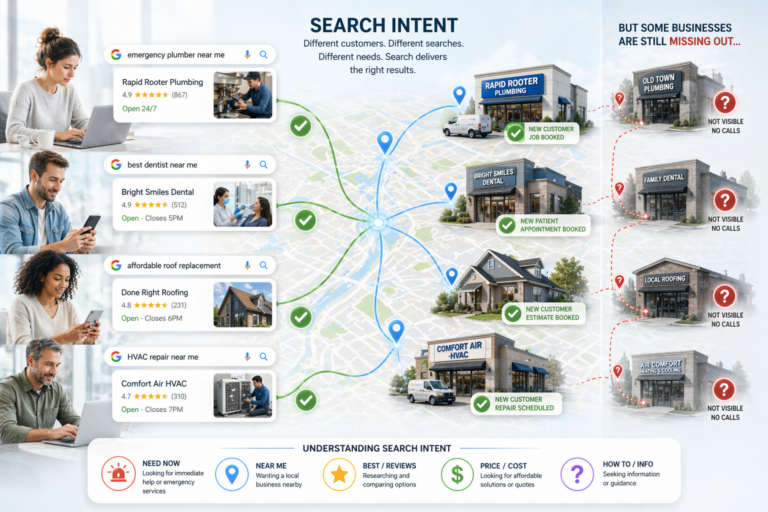
Every search marketing strategy begins with understanding what potential customers are looking for. People turn to search engines when they have a problem, a question, or a need that requires a solution.
These searches often reflect real-world situations. A homeowner dealing with a broken furnace, for example, may search for immediate help. A business owner preparing for tax season may search for professional advice. Each of these searches represents an opportunity for a business to appear and offer assistance.
By identifying common search phrases, businesses can begin to understand how customers describe their needs. This is often referred to as keyword research, but at its core it is simply listening to how people talk about their problems.
When businesses align their content with these searches, they increase the likelihood of being discovered.
Step 2: Choosing How to Appear in Search Results
Once businesses understand what people are searching for, the next step is deciding how to appear in search results. There are several ways to gain visibility, and each serves a different purpose.
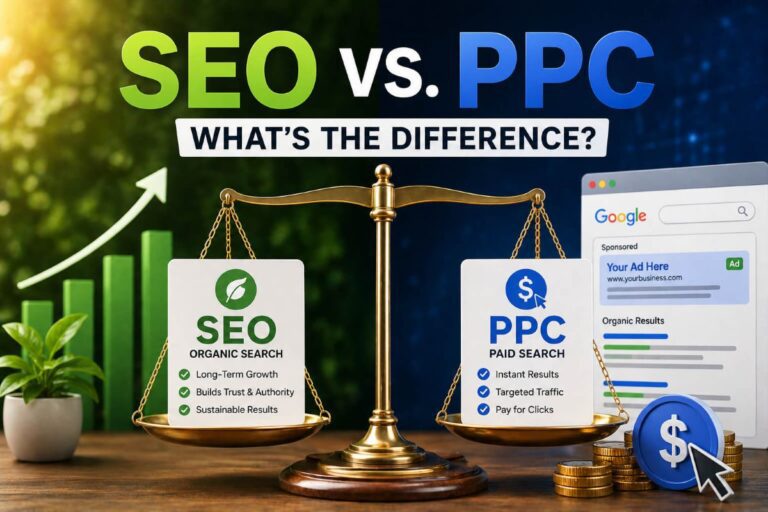
Some businesses focus on creating content that appears in organic search results over time. Others choose to run paid ads to gain immediate visibility. Many combine both approaches to balance short-term and long-term results. Local businesses also benefit from appearing in map listings, which can generate calls and visits from nearby customers.
The choice is not always one or the other. In many cases, combining different methods creates a stronger presence and increases the chances of being seen.
Step 3: Creating Content or Pages That Match the Search
Visibility alone is not enough. When a potential customer clicks on a search result, they expect to find information that directly addresses their needs. This is where content plays an important role. The page must clearly explain the service being offered or provide helpful information that matches the search intent. If the page does not meet expectations, the visitor may leave and choose another option.
For service-based businesses, this often means having clear service pages that describe what is offered, where the business operates, and how customers can get in touch. Informational content can also be useful for answering common questions and building trust. The goal is to create pages that feel relevant and helpful rather than overly promotional.
Step 4: Attracting Visitors Through Search Visibility
Once content is in place, the next step is attracting visitors. This happens when pages begin to appear in search results and users click through to the website. At this stage, small improvements can make a noticeable difference. Titles and descriptions influence whether a user chooses to click on a listing. Clear and relevant wording can increase the number of visitors without requiring higher rankings.
As visibility improves, traffic can become more consistent. Businesses may start to notice patterns in when people search and what they are looking for. This stage is where search marketing begins to feel more tangible, as website visits translate into real opportunities for engagement.
Step 5: Turning Visitors Into Leads
Getting visitors to a website is only part of the process. The next step is converting those visitors into leads or customers. When someone arrives on a page, they are usually looking for reassurance that they have found the right solution. The website should make it easy to understand what the business offers and how to take the next step.
Clear contact options, straightforward explanations, and a sense of professionalism all contribute to whether a visitor decides to reach out. Even small details, such as how information is presented, can influence this decision. Conversion is not about pressure. It is about making it easy for the customer to act when they are ready.
Step 6: Measuring and Improving Results Over Time
Search marketing is not a one-time effort. It improves through observation and adjustment. Businesses that pay attention to what is working can make gradual improvements that lead to better results. Over time, patterns begin to emerge. Certain topics may attract more visitors, while others may lead to more inquiries. Understanding these patterns helps businesses focus their efforts more effectively.
Improvements may involve refining content, adjusting how services are described, or expanding into additional topics that customers are searching for. This ongoing process turns search marketing into a system rather than a series of isolated actions.
Why Following a Process Matters
Without a clear process, marketing efforts can become inconsistent. Businesses may try different tactics without understanding how they connect, leading to mixed results.
A structured approach provides clarity. Each step builds on the previous one, creating a path from search to customer. This reduces uncertainty and makes it easier to decide what to do next. Over time, following a process can lead to more predictable outcomes. While no system guarantees results, a consistent approach increases the likelihood of success.
How This Process Applies to Local Businesses
Local businesses often operate in competitive environments where customers have multiple options. Being visible at the right time can make a significant difference. When someone searches for a nearby service, they are often ready to take action. A business that appears in search results and provides clear information has a strong advantage.
By following a structured process, local businesses can position themselves to capture these opportunities more effectively. This does not require advanced technical knowledge. It requires understanding the steps involved and applying them consistently.
A Simple Way to Think About the Process
The search marketing process can be summarized as a sequence that connects customer needs with business solutions.
A customer identifies a problem and searches for help. The business appears in search results and provides relevant information. The customer visits the website and decides whether to make contact. Each step depends on the previous one. When all parts are aligned, the process works smoothly and produces results.
Looking Ahead
Now that the process has been explained, the next step is learning how to apply it in practical ways. Topics such as keyword research, content creation, and conversion optimization build on this foundation. Understanding the process makes these topics easier to approach because they can be seen as parts of a larger system rather than isolated tasks.
Key Takeaways
Search marketing follows a structured process that connects customer searches with business solutions. By understanding what people search for, creating relevant content, attracting visitors, and making it easy for them to take action, businesses can generate leads from Google.
Consistency and gradual improvement play an important role in long-term success. Businesses that follow a clear process are better positioned to achieve reliable results.
FAQ
The search marketing process is a step-by-step approach that helps businesses connect with customers through search engines and turn that visibility into leads.
Results can vary depending on the approach used. Paid advertising can produce immediate visibility, while organic search results typically improve over time.
Most of the process involves understanding customer needs and presenting clear information. Technical knowledge can help, but it is not required to get started.
See Also: Introduction to SEO for Local Businesses