How Can I Get Google
to Work For My Business
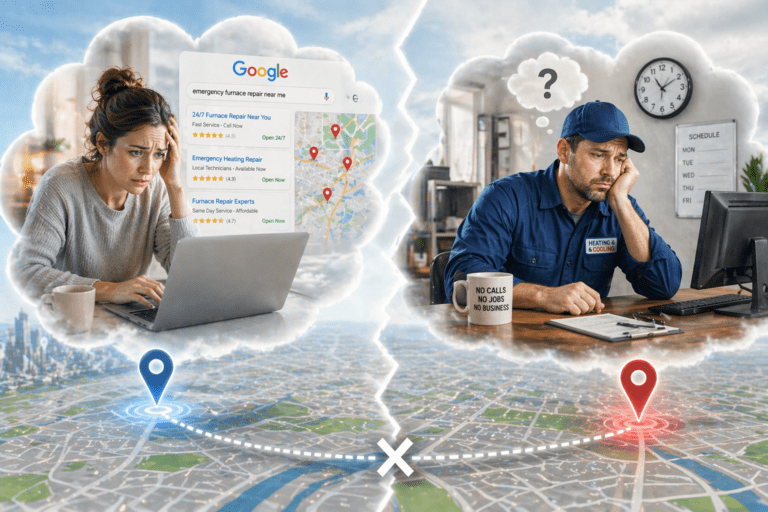
Most local business owners do not fail at SEO because they are lazy or unwilling to invest. They fail because they are working from the wrong idea of how Google actually works.
They treat Google like a billboard. In reality, Google is a decision engine.
That misunderstanding is subtle. But when a local business understands how local ranking factors can change their business, it can change everything. Most businesses believe that if they build a website, Google will find it automatically.
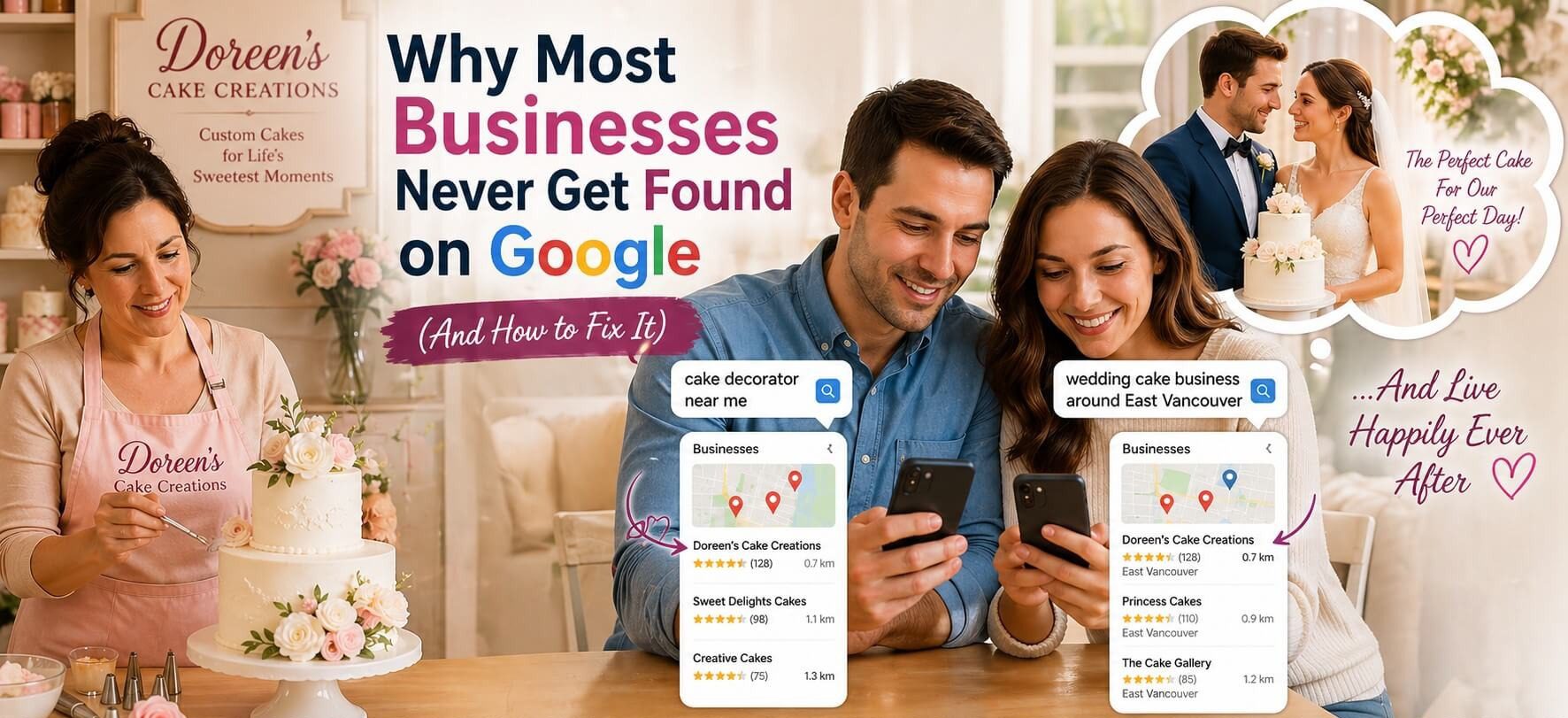
Image Doreen, she owns a small cake decorating business and creates beautiful wedding cakes and birthday cakes as well as all kinds of pastries. She tried dabbling in online marketing and has a website up and she even put in some keywords she thought would bring traffic to her store.
Doreen thinks to herself that maybe if she spent money online, Google would automatically make her business show up when people searched for her cake decorating services with the keywords she used.
But that is not how Google works.
Google is not trying to promote every business equally. It is not even about Doreen and her cake decorating business. It’s about the person trying to find Doreen and her business instead. Google’s job is to solve problems quickly for that person trying to find Doreen.
So now let’s introduce or searchers, Gail and and her husband Mike. They’re both getting married soon. They have already booked their venue and made numerous other preparations and are now looking for someone to create for them the perfect wedding cake.
They both search online. Mike types in “cake decorator near me”, while Gail searches for “wedding cake business around East Vancouver.”
Google is not thinking about Doreen or asking how it can help her business grow. Instead, Google is focused entirely on the search itself that Gail and Mike are focused on. Google is trying to match Gail with businesses that clearly offer wedding cakes in East Vancouver. At the same time, Google is trying to show Mike cake decorators that are nearby and ready to help.
Everything revolves around answering the search correctly. That leads to one critical question:
Which business is the most relevant, trustworthy, and convenient option for Mike and Gail right now?
That is the real game. If Doreen’s business does not clearly answer that question, she may never show up — no matter how good her cakes are. And yes, it puts new meaning to the words, having your cake and having to eat it too.
The Core Misunderstanding
Many business owners think Google ranks websites simply because they exist. They assume a good-looking website should be enough, or that adding the right keywords will push them to the top. But Google is not looking at just one piece of your business. Google looks at it all:
- Your website
- Your Google Business Profile
- Your Location
- Your Reviews
- Your Business Information across the web
- And How Users Interact with your business
These all play a role.
This is where most businesses get stuck. They are trying to “do SEO” without understanding what Google is actually measuring. Once you understand that Google is not ranking effort, but ranking signals, everything starts to make more sense.
Google’s Job Is Different From Your Expectation
Your goal is to get more visibility, more phone calls, and more leads. Google’s goal is different. Google wants to give the searcher the best possible answer as quickly as possible. That means Google is not simply asking, “Which business wants to rank?”
It is asking:
Which result is most likely to satisfy this search?
This difference explains why two similar businesses can get completely different results online. For example, imagine two other cake decorators that are located in the same area as Doreen:
- Bill and his wife Heather has a basic website, with few reviews, and limited online presence
- Anna and her daughter Joanne, meanwhile, have a cake decorating storefront along with detailed service pages, consistent listings, and strong reviews
Even if both Bill and Anna make equally beautiful cakes, Google has more confidence in Anna and her daughter Joanne. That confidence determines visibility.
The Real Game Is Signal-Based Ranking
Google does not “see” your business the way a human does. It sees data. More specifically, it sees signals. These signals help Google decide whether your business deserves to appear for a specific search. Some of the most important signals include:
- Your business name, address, and phone number consistency
- Your Google Business Profile completeness and activity
- Customer reviews (quantity, quality, and recency)
- Website content and service relevance
- Backlinks and local citations
- User behavior (clicks, calls, directions)
Google takes all of these signals and evaluates them together. It is not asking whether or not you tried hard enough. It’s asking whether the data proves that your business is a strong match.
Why Visibility Matters More Than Ever for Local Businesses
Understanding how Google ranks businesses is important, but understanding why visibility matters is what makes local SEO urgent. Most customers are not browsing multiple websites or comparing dozens of options. They are making fast decisions based on what Google shows them first.
Consider this:
- Nearly 46% of all Google searches have local intent
- Over 75% of people never scroll past the first page of results
- And to that – a large percentage of local searches results in a call, a visit, or a purchase within 24 hours of that search
Now let’s get back to Gail and Mike. They’re still trying to find someone to make them their dream wedding cake. Over 350 guests will be arriving so this wedding cake is very important to them. Mike and Gail need answers soon. They have their own businesses to run and can’t afford to spend hours researching for cake decorators.
They will each look at the top results, maybe compare a few options, and make a decision from there. If Doreen’s business is not visible in those top results, she is not even going to be considered by Gail and Mike. How sad. Too bad.
This is why local SEO is not just about ranking higher. It’s about being present at the exact moment someone is ready to take action. For service-based businesses especially, timing matters. When someone searches for a wedding cake, a plumber, or an electrician, they are often ready to move forward immediately. That means the businesses Google shows first have a massive advantage.
In many cases, the difference between being ranked #3 and #10 is the difference between getting the customer or losing them completely.
How Small Differences Create Big Ranking Gaps
One of the most frustrating parts of Local SEO is that small differences can lead to very large gaps in visibility. Two businesses can appear similar on the surface, but send very different signals to Google.
For example, Doreen has a basic website with limited service details and some keywords. She even started working on her Google Business Profile and a handful of reviews. She’ll get around to it later. Meanwhile, her competitor cake decorators, Anna and her daughter Joanne have:
- Search Engine Optimized website along with
- Dedicated pages specifically for wedding cakes
- A fully optimized Google Business Profile with photos and updates
- Dozens of recent, high-quality reviews
To a customer, both businesses might seem comparable. But to Google, one business sends stronger and more clearer signals. That difference directly impacts who gets shown to Gail and Mike.
This is why local SEO often feels unpredictable to business owners. It is not random. It is signal-based. Once you understand that, you stop guessing and start improving the specific factors that actually influence rankings.
At this point Doreen decides to sit down and find out where she really stands when people try searching for her business online. She wants those people to find her business and decides to see if she can improve her standings in the search engines.
Doreen asks herself, “What does it take to rank my cake decorating business website in the search engines so that people can find my business and buy my products?” Well, Doreen. There are a few factors that can help drive those rankings. That’s Next…